
Have you ever softened a difficult message so much that nobody could tell what you meant? Picture Alex, a team manager, addressing a colleague who keeps interrupting in meetings. “You’re brilliant at getting ideas moving,” Alex says, “but perhaps we could make a little more room for others.” The colleague hears praise, not a request. Conflict management training helps managers handle moments like this with clearer language, active listening and empathy, without turning disagreement into a battle.
It also helps you notice how your words and reactions affect a conversation. You can learn to stay calm, explore what lies beneath a disagreement and work towards a practical next step. Crucially, you practise rather than just talk about it: realistic role-play gives you room to try a different response, hear how it lands and try again. Alex’s situation is familiar, and there’s no blame in it. These skills can be learnt. Here, we’ll explore what conflict management training develops, how managers can apply those skills with their teams, and how practice can build confidence before a real conversation.
Key Takeaways
- Notice how an unspoken disagreement can affect you, the other person and the wider team.
- Consider what each person may be thinking, and how your own habits could shape the conversation.
- Use clear, respectful language to raise a concern and invite the other person’s perspective.
- Build practical confidence by practising difficult conversations, getting feedback and trying again.
What workplace conflict is costing you and your team
Conflict can begin with competing priorities, unclear responsibilities or a remark that lands badly. Imagine Alex putting off a conversation about interruptions in team meetings. The answer is to name the behaviour calmly and explain its impact, rather than hinting and hoping the colleague will understand.
Interruptions in meetings: what to say
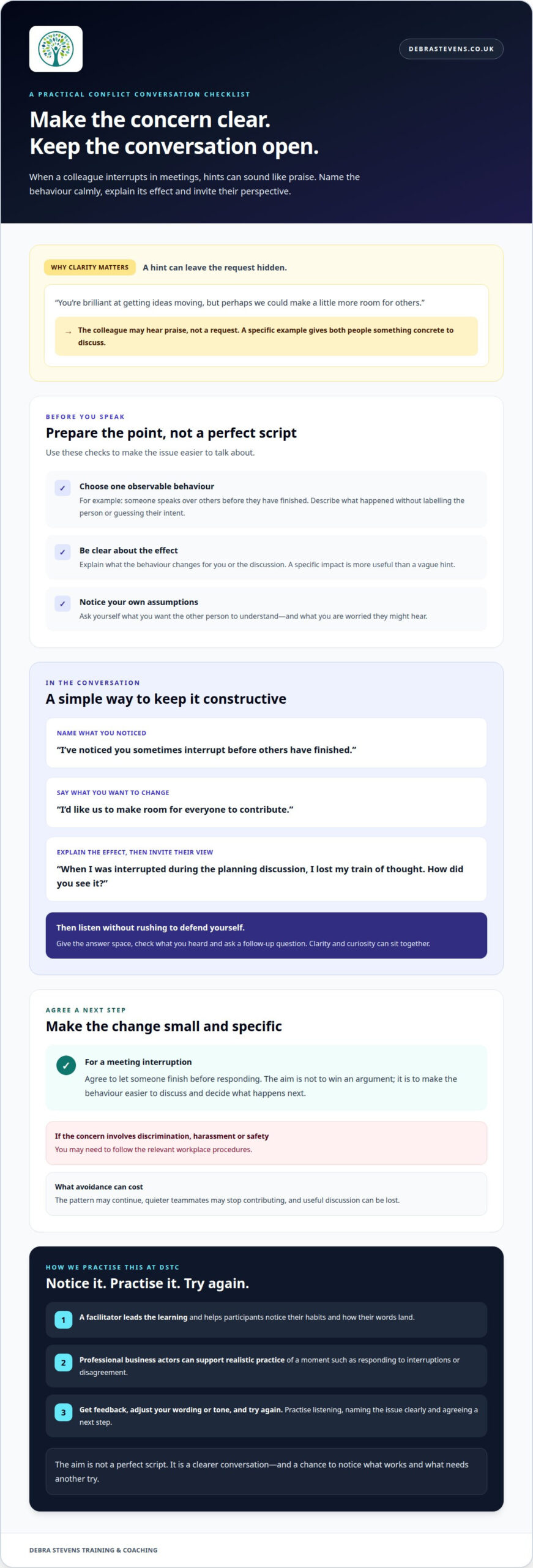
Disagreements may be about workload, decisions, communication styles or who owns a task. Picture Alex saying, “Perhaps we could make a little more room for others,” instead of naming the interruptions. Alex hopes to avoid embarrassment, but the colleague may hear only praise. A clearer opening might be: “Could we talk about what happens in meetings? I’ve noticed you sometimes interrupt before others have finished. I’d like us to make room for everyone to contribute.” Naming a specific behaviour gives the colleague something concrete to respond to.
What avoiding the conversation can cost
When Alex avoids the conversation, the colleague keeps interrupting, while quieter teammates may stop contributing. Alex spends energy rehearsing the message, and the team loses useful discussion. If the concern involves discrimination, harassment or safety, Alex may need to follow the relevant workplace procedures. For this meeting issue, though, Alex can start with a direct, private conversation and listen to the colleague’s perspective. Handling it poorly can deepen distrust and leave the pattern unresolved.
A practical first conversation
Alex could describe one example, explain its effect and ask an open question: “When I was interrupted during the planning discussion, I lost my train of thought. How did you see it?” Then Alex can agree a small next step, such as letting someone finish before responding. This is not about labelling the colleague or winning an argument. It is about making the behaviour easier to discuss, so both people can consider what happens next.
What might be happening for both of you
Alex may fear damaging the working relationship, while the colleague may not realise their interruptions are affecting others. Those different assumptions can shape the same conversation.
Active Listening and Assertive Communication
Alex can describe the behaviour without labelling the colleague: “When you speak over people, they lose their chance to finish.” Then pause and ask, “How do you see it?” Active listening means giving the answer space, checking what you heard and asking a follow-up question. These communication skills combine clarity with curiosity, rather than forcing a choice between silence and confrontation.
Communication Barriers and Breakdowns
“Perhaps we could make more room” sounds gentle, but hides the request. The colleague might hear approval, while Alex expects change. Stress, assumptions and hurried conversations can also get in the way. Notice what you do when uncomfortable: soften your message, interrupt or rush to defend yourself? Naming one specific example gives both people something concrete to discuss.
Alex might also assume the colleague knows how their interruptions land, or that speaking plainly will make things worse. You might make similar assumptions when a conversation feels awkward. Before you speak, ask yourself what you want the other person to understand, and what you’re worried they might hear. This week, Alex could name one specific interruption, explain its effect and ask for the colleague’s view. It may feel uncomfortable, but it gives them both a clearer place to start.
A few things to say or do differently
Alex can replace vague praise with a clear example, then invite a response. Practising those words beforehand can make the real conversation feel less daunting.
Scenario-Based Role-Play
In a scenario-based role-play, Alex practises addressing interruptions in a team meeting. The colleague might reply, “I’m only trying to keep us on track.” Alex can say, “I can see that. I also want everyone to finish their point.” A realistic exchange lets people notice how their words land, develop a steadier response and try again after feedback.
Practical Exercises
Start with one challenging moment, such as an interruption, and describe what happened without judging intent. Then ask an open question: “How did that meeting feel from your side?” Finally, agree on a next step together, such as letting each speaker finish. These practical exercises turn knowledge into language you can use. The aim isn’t a perfect script, but a more engaging conversation and more positive outcomes.
Afterwards, Alex may still feel nervous. But Alex has tried a clearer opening and listened to a response. That’s a useful first step.
How we tackle this at DSTC
At DSTC, we help managers and teams practise conversations they have been putting off. Our Conflict Management Workshops focus on real workplace tension, not theory alone. A facilitator leads activities that help you notice your habits and how your words land.
Picture Alex returning to the meeting where interruptions caused frustration. In a scenario based on this moment, professional business actors can support realistic practice. Alex might begin, “I’ve noticed people don’t always get to finish. Can we make space for each voice?” The facilitator helps participants pause, reflect on the response and receive feedback on what they did. Then Alex tries again, adjusting tone or wording instead of memorising a perfect script.
You can practise responding when someone disagrees, goes quiet or becomes defensive. The focus stays on specific behaviours: listening without interrupting, naming the issue clearly and agreeing on a next step. This approach suits a team seeking shared ways to address tension, or a manager preparing to speak with a colleague. You can notice what already works and what needs another try, then choose a response that feels both clear and respectful.
Our Conflict Management Workshops suit teams seeking shared ways to address tension and managers preparing to speak with a colleague. They can include facilitated activities and realistic scenario-based practice, with feedback on listening, raising issues and agreeing on next steps.
Notice your own habits and impact
Before Alex speaks again, there’s more to notice than the colleague’s interruptions. Picture Alex replaying the last meeting: a tight jaw, a quick “anyway”, then a change of subject. That reaction matters. It may show that Alex is uncomfortable, not that the conversation is impossible.
Self-awareness means noticing what you do under pressure and how it might land. Perhaps you soften a request until it disappears. Perhaps you jump in with a solution before hearing the other person. There’s no blame in this. We all have habits, and noticing one gives us a choice.
Ask yourself: What am I assuming about the other person’s intentions? What do I tend to say or do when I feel challenged? How might my words, tone or silence affect the other person and the rest of the team?
Alex might realise that avoiding the subject was meant to protect the relationship, but left the colleague without clear feedback. That’s useful information, not a reason to be hard on yourself. Be gentle with yourself. These are human skills, and they take practice. You haven’t failed; you may simply not have found words that feel clear and respectful yet. Start by noticing one habit before your next difficult conversation.
One small thing to try this week
This week, choose one conversation you’ve been putting off. Before speaking, write down one behaviour you’ve noticed and one effect it has had. Keep it factual, not a judgement about someone’s character. For Alex, that means naming the interruptions and their effect on colleagues trying to contribute.
Picture Alex with the meeting invite open, feeling the familiar urge to postpone it again. Instead, Alex practises one opening sentence aloud: “I’d like to talk about interruptions in our meetings. I’ve noticed some people don’t get to finish their points.” It’s direct, but leaves room for a conversation.
Alex then asks, “How does that look from your side?” and listens before suggesting a solution. The colleague explains they were trying to keep the discussion moving. Alex acknowledges that intention, then describes how interruptions affect others. They agree to make more space for each speaker at the next meeting.
Nothing is magically fixed. The next meeting still needs attention. But Alex has replaced another delay with a clear, respectful conversation. A small step can show us that handling conflict doesn’t mean having perfect words or controlling someone else’s response. It means noticing what’s happening, saying what matters and staying curious about the other person. If the conversation feels awkward, that doesn’t mean you’ve failed. You’re practising.
Keep practising with DSTC
Conflict conversations rarely feel comfortable straight away. The aim isn’t to become perfectly calm or find a magic sentence. It’s to notice what you do under pressure, understand how it lands and practise a more useful response. That’s how awareness and practice work together.
In a Conflict Management Workshop, a facilitator guides participants through familiar workplace situations, such as addressing repeated interruptions or responding when a colleague disagrees. Professional actors can support the practice by making the exchange realistic. Participants can see how their words land, receive feedback and try a different approach. The facilitator helps them reflect rather than handing out a script to follow.
Picture Alex preparing for another team meeting. Alex still can’t control how the colleague responds, but can choose to name the behaviour clearly, ask for their perspective and listen. One conversation won’t settle every disagreement. It can, however, give both people a clearer starting point for the next one.
Join the free live training invite list so you never miss a session. If you’d rather talk through a situation that’s on your mind, book a 15-minute call with Debra. You’re welcome to choose whichever feels useful to you.
Handling Difficult Conversations with Debra Stevens Training and Coaching
Debra Stevens Training and Coaching runs facilitator-led workshops where you can practise difficult conversations, including moments of conflict, get feedback and try again.
If you’re looking for support for yourself or your team, these workshops sit alongside Communication & Impact Training, Leadership & Management Training, and Conscious Human Skills Workshops.
Frequently Asked Questions
What skills will I gain from this course?
You’ll practise raising a concern without labelling the other person or guessing their motives. If, like Alex, you’re putting off a conversation about conflict, start with what you observed and how it affected you. You might say, “When the handover was missed, I was left without the information I needed. Can we talk about what happened?” Then listen to their perspective before deciding what to do next.
Do I need any prior experience to take this course?
No. You don’t need a mediation certificate to practise an everyday workplace conversation. You can bring a situation involving a disagreement, competing deadlines or a difficult handover. With a facilitator leading and actors supporting the practice, you can try out what to say, notice how it lands and have another go.
What are the main topics covered in this course?
We focus on what to say when disagreement is becoming uncomfortable: how to raise a concern respectfully, hear another perspective and agree a workable next step. You might practise saying, “I think we see this differently. Can you help me understand your view?” The aim isn’t to memorise a script or make every difference disappear.
What skills does conflict management training teach?
You can practise listening, speaking assertively and staying curious when a conversation feels tense. You’ll also have a chance to notice your own habits: do you avoid the point, become defensive or rush to fix things? In Alex’s situation, a small change might be to pause and ask a question before explaining his own view. Awareness and practice are where change starts.
Who should take conflict management training in the UK?
It may help managers, team leaders and HR or L&D professionals who need to handle workplace disagreements. It can also suit teams that want to raise concerns before frustration builds. If you’re worried about making a conflict worse, practising the words in a realistic conversation can help you explore a different way to approach it.
How long does conflict management training take and is it available online?
Sessions can be delivered in “bite sized 2-3 hour sessions” and training can also take place virtually, for example through Zoom. The format and programme can be shaped around the organisation’s needs. The focus remains on practising realistic conversations about conflict, with facilitator-led learning and actor-supported practice where relevant.






2 Comments