

A colleague offers a sensible suggestion in a meeting. It lands as criticism, and the conversation closes down. I’ve seen how a small shift in tone or timing can change what happens next. Influencing skills training helps you build rapport, make your point clearly and keep the conversation open without resorting to pressure.
You probably already know that trust matters. The tricky part is finding the right way to connect when people have different priorities, communication styles or concerns. I start by listening, noticing what matters to the other person and adapting my approach to the situation. That’s influence with integrity.
Here, I’ll share practical ways to build rapport, develop your influencing skills and persuade without manipulating. You’ll also learn to adapt your approach when a conversation calls for a clear case, a shared solution or one more thoughtful question. Try one idea in your next conversation, then reflect on how it lands.
Key Takeaways
- Build rapport by listening for what matters to the other person, then adapt your language and pace to suit the conversation.
- Influencing is a skill you can develop through practice, reflection and realistic exercises, not simply a quality you’re born with.
- Persuade with integrity by being clear about your reasons, listening to concerns and making space for genuine agreement.
- Choose your approach according to the person, the context and what the conversation needs next.
How can influencing skills training help you build rapport quickly?
Measure the impact by comparing a conversation before and after you practise. Notice whether you ask more open questions, hear concerns sooner and agree a clear next action.
Building Trust and Rapport
Trust grows when your words and actions match. In a meeting about a delayed project, acknowledge the pressure before proposing a solution. Then listen without preparing your reply. Reflect the concern you heard and check that you’ve understood it. This shows respect and helps the other person speak plainly.
Active listening isn’t silent agreement. Ask another question, summarise the key point, then invite correction. For example: “Have I understood that the deadline is the main concern?” This helps make the conversation more accurate. In coaching or influencing skills training, participants can practise the exchange, observe how it lands and try a different response.
Adapting Communication Preferences
People may prefer different levels of detail, pace or directness. If a colleague wants a concise recommendation, lead with your main point and offer evidence afterwards. If they need time to weigh options, slow down and invite questions. Adapt your delivery, not your honesty. The aim is connection, not imitation.
The Johari Window offers a useful way to think about relationships. It explores what you and others know, including shared information, private thoughts, blind spots and areas neither person has discovered. In a one-to-one, share a relevant observation and invite feedback. This can reveal how your approach affects someone else, rather than leaving you to guess.
Apply what you’ve learnt in a real conversation. Choose one relationship, listen for the other person’s priority, then agree a specific next action together. Afterwards, notice whether they contributed more openly or clarified a concern. These signs give you something practical to reflect on, rather than a vague impression that rapport improved.
Is influencing innate, or can it be learnt?
A manager who avoids difficult conversations can learn to influence with more confidence. Skills develop through preparation, practice and reflection, not simply personality. Influencing skills training gives you a structured way to work on specific conversations, from gaining support for a proposal to addressing resistance to change.
The most useful influencing courses in the UK match your role and workplace situations. Look for practical rehearsal, helpful feedback and opportunities to try a conversation again, rather than theory alone. A course for a team negotiating priorities may need different scenarios from one for managers handling change.
How do you choose? Start with the outcomes you need, such as clearer proposals or more constructive discussions. Consider whether the format includes live practice and whether examples can be tailored to your organisation. If CPD accreditation matters to your development, include that in your criteria.
Preparation can begin before the session. Participants might bring a workplace scenario, such as a decision they need colleagues to support. This gives the facilitator a real starting point and connects the learning to leadership responsibilities. Useful pre-course assignments should prepare people to practise, not bury them in reading.
In a live, interactive session, participants can test different approaches and see how their words land. For example, practise presenting a recommendation, get feedback on its clarity, then try again. A facilitator can connect each practice round to the intended outcomes. This makes learning active and relevant to conversations back at work.
Suitability depends on the people and situations involved. New managers may need to influence former peers; experienced leaders may need to build agreement across teams. The course should allow enough time for relevant practice and reflection. CPD points or accreditation can matter when they fit your development needs, but practical workplace application remains a useful measure.
If you’re shaping a programme around real conversations, explore practical communication and influencing development and consider which workplace scenarios participants need to practise.
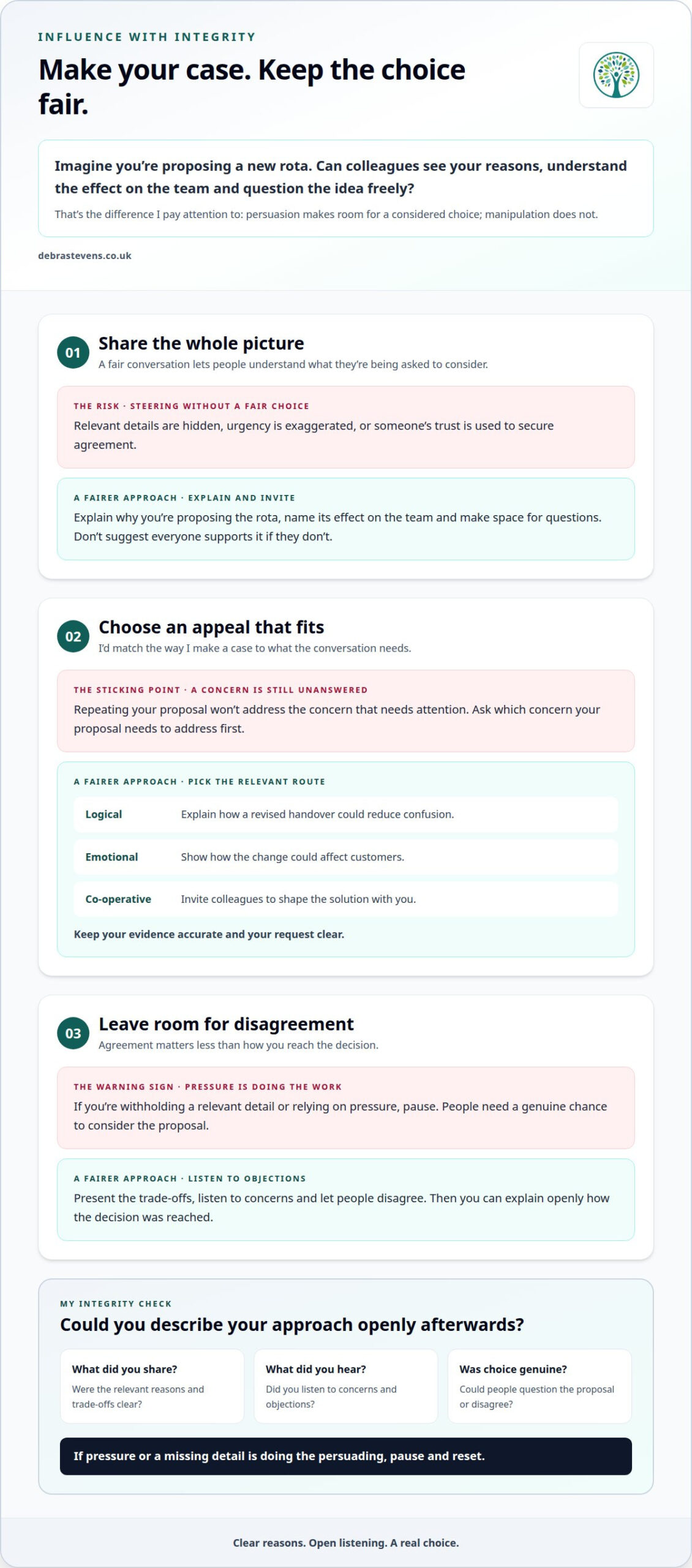
Persuasion, manipulation and integrity
A persuasive case invites people into a decision; manipulation tries to steer them without giving them a fair choice. The difference lies in what you share, what you listen to and whether people can disagree.
Influencing and Persuasion Techniques
Choose your appeal to fit the conversation. A logical appeal might explain how a revised handover reduces confusion; an emotional appeal could show how it affects customers. A cooperative appeal invites colleagues to shape the solution with you. These techniques work best when your evidence is accurate and your request is clear. In a challenging discussion, ask which concern your proposal needs to address first.
Responsible Influence and Integrity
Persuasion leaves room for a considered choice. Manipulation may hide relevant information, exaggerate urgency or use someone’s trust to secure agreement. Imagine a manager proposing a new rota: explain the reason, name the effect on the team and invite questions. Don’t imply that everyone supports it if they don’t. Honesty helps build confidence in the conversation, even when people disagree.
Ask yourself whether you’d be comfortable describing your approach openly afterwards. If you’ve presented the trade-offs and listened to objections, you can explain how the decision was reached. If you’re relying on pressure or withholding a relevant detail, pause and reset. Integrity isn’t a polished phrase in a programme; it’s what you do when agreement feels difficult.
Persuasion and Gaining Buy-in
Buy-in grows when people have a meaningful part in shaping change. Before introducing a new team process, for example, involve affected colleagues early. Ask what could make the transition difficult, then use their answers to refine your plan. Finding genuine common ground can turn a fixed position into a practical discussion.
People are more likely to contribute when they can raise concerns without being dismissed. Listen to objections, explain what can change and be clear about what cannot. Instant agreement isn’t necessary. Aim for a shared understanding of the next action, such as testing one part of the proposal and reviewing it together.
Adapting influencing styles to different situations
The same message can land differently with a colleague, senior leader or customer. Before influencing someone, consider who they are, the situation and what needs to happen next.
Adapting Communication Styles
Adjust your pace, detail and tone to the conversation, not your principles. A finance director reviewing a proposal, for example, may want the evidence and implications upfront. A colleague affected by the change may need space to explain practical concerns first. Notice their questions and behaviour, then adapt how you communicate. That awareness helps you respond to the person in front of you.
Choosing an Influencing Style
Start by identifying what the situation calls for. If a safety concern needs immediate attention, communicate the risk clearly and state the action required. If a team is weighing options, invite discussion and explore different views. Authority may clarify responsibility, but it won’t automatically create commitment. Choose a style that fits your role, the decision and the people affected.
Before your next important conversation, name the outcome you need, consider what the other person cares about, then choose how to open. A request for resources might begin with the effect on a shared project. A performance conversation may need a specific example and a curious question. Keep checking whether your approach is opening up the discussion or closing it down.
Notice when your first approach stops working. If a detailed explanation leaves someone disengaged, pause and ask what they need to understand. If a direct request meets resistance, explore the concern before repeating it. Flexibility isn’t inconsistency. It means changing your approach while staying clear about your purpose.
In Communication & Impact Training, these choices can be explored through relevant workplace conversations. Discuss communication training for your team when you want to practise adapting your approach to different situations.
Debra Stevens Training and Coaching
Debra Stevens Training and Coaching helps you turn influencing ideas into practical workplace communication. If you or your team need to handle challenging conversations, gain support for decisions or adapt your approach across relationships, I can shape training around the situations you face.
Rather than stopping at theory, sessions use realistic workplace scenarios so participants can practise what to say, notice how it lands and try again with feedback. Professional actors can work alongside facilitators, making practice feel relevant before the conversation counts. The focus is on building skills for real interactions, not memorising a script.
To discuss training for your team, book a call with Debra Stevens Training and Coaching and talk through the conversations you want to handle more thoughtfully.
Put your next conversation into practice
Choose a conversation you’ve been putting off or a decision you want to move forward. Before it happens, get clear about the outcome you’re hoping for and what the other person may need from you. Then stay curious. Notice when your words invite a response and when it’s time to pause and listen.
That’s where influencing skills training can support your next step, turning intention into considered action. The Why Factor, Conscious Human Skills Workshops and Leadership & Management Training offer different contexts for developing communication and working relationships. The right focus depends on the conversations and people your team needs to influence.
If you’d like to explore what support could look like for your team, contact Debra Stevens Training and Coaching. Bring a conversation you’d like to handle differently, and we can start there.
Frequently Asked Questions
How can you improve your ability to gain buy-in?
Influencing skills training can help you map who needs to contribute to a decision and what each person needs to move forward. For a cross-team project, clarify who approves the proposal, who will deliver it and who will be affected. Then plan the order of conversations so key questions are addressed before the final decision meeting.
How can you influence in hybrid or remote teams?
Make your contribution easy to follow across different channels. In a virtual project meeting, share a brief agenda beforehand and state the decision needed at the start. If someone joins asynchronously, give them a clear way to comment before the group closes the discussion. This helps avoid treating attendance or silence as a sign of agreement.
How can you influence senior stakeholders or decision-makers?
Make it easy for a decision-maker to see what you’re asking them to decide. For example, put your recommendation first in a short briefing, then include the supporting detail they may need. If the decision affects several teams, explain the dependencies. A clear request helps keep a meeting focused and makes the next step easier to identify.
How can you persuade others while remaining authentic?
Keep your language recognisably yours instead of borrowing phrases that feel unnatural. If you’re asking a colleague to change a process, explain the specific part you believe needs attention and why. Avoid promising more than you can deliver. A straightforward explanation lets you make a clear request without sounding rehearsed or overstating your case.
How does emotional intelligence support influence?
Emotional intelligence can help you manage your response when a conversation becomes tense. If a proposal receives sharp criticism, take a breath before replying and separate the feedback from your first reaction. Then ask which part needs attention. That pause helps you stay constructive and choose a response that fits the discussion.
How will I benefit?
You can take a more deliberate approach to workplace conversations. Before a meeting, identify the decision you need, the people involved and the clearest way to present your request. Afterwards, reflect on what helped the discussion progress and what you might adjust next time. This gives you a practical way to keep developing your communication habits.
If you’d like to practise, you’re welcome to join one of my free live training sessions.






One Comment