

A customer is frustrated, your colleague knows the answer, but the words come out sounding defensive. How do you build confidence in customer-facing teams so they can handle moments like this with calm and clarity? In my 26 years in training, I’ve seen that confidence grows through practice, support and the trust people build with one another.
Product knowledge matters, but so does how a team listens, responds and follows through. Clear, trustworthy communication helps customers feel heard, while empathy and active listening help staff stay steady when conversations become difficult.
Here are practical ways to build that confidence: make space for honest team conversations, practise realistic customer interactions, and give people useful feedback and support. There’s also a short exercise to try, because noticing how a conversation lands can be the start of a better one.
Key Takeaways
- Make expectations and next steps clear, especially when your conversation with a customer becomes difficult.
- Notice emotional cues and pause before you react, so you can respond with care and professionalism.
- Listen without interrupting, reflect the concern you’ve heard and acknowledge your customer’s experience.
- Practise realistic conversations, use feedback and seek ongoing support to feel more prepared for challenging interactions.
1. Confident communication and customer trust
Imagine you hear, “That’s not my department,” then get passed between colleagues. The next person may know the answer, but trust has already taken a knock. In my experience, clear communication matters at every step: explain what you can do, who will take ownership and when you can expect an update.
Confidence doesn’t mean having an instant answer to every question. It means staying calm, being honest about the next step and following through. You might say, “I’ll speak to the delivery team and update you this afternoon.” A specific commitment gives you a clearer idea of what to expect than vague reassurance.
If you manage a customer-facing team, how do you create psychological safety? I’d start by agreeing ground rules together, such as listening without blame and treating mistakes as chances to learn. When you can raise concerns or ask for help without fear, you can talk through difficult customer interactions and practise better responses.
You might notice signs of low trust: colleagues gossip, make assumptions or avoid raising unresolved disagreements. A past conflict can keep affecting the team, even after the people involved have left. Make space to discuss what happened, what each person needs now and what might help repair working relationships.
Trust also grows when managers delegate decisions with clear boundaries. If you can offer a replacement or escalate a complaint, your manager should explain which options you can use and when you need support. That clarity helps you act confidently without feeling you have to seek permission for every conversation.
Scripts can give you a useful starting point, but relying on them too heavily may make your responses sound mechanical. Sales targets can also distract you from what the customer actually needs. Try adapting your language and prioritising a helpful, honest conversation.
After you resolve a complaint, follow up with a brief call or email. Ask whether the solution addressed the concern, then share any next steps. A quick team reflection can help too: what built trust in that conversation, and what could land differently next time?
2. How to build confidence in your team?
A customer says, “You’ve charged me twice,” and you feel your shoulders tighten. In my experience, emotional intelligence starts with noticing that reaction, then choosing a response instead of reacting automatically. Notice what you’re feeling, separate the customer’s frustration from yourself and focus on the practical issue in front of you.
In a difficult situation, a brief pause can help you respond effectively. Take a breath, slow your speech and ask, “Can you talk me through what happened?” That question gathers useful detail without turning the exchange into a contest. Practise different versions so you can find words that feel natural.
Rapport grows through small, relevant signs of attention. Using a customer’s name, remembering a preference or acknowledging a concern can create a warmer connection. For stakeholder relationships, try a simple map: note who needs an update, what they need to know and who owns the next conversation. This makes collaboration more deliberate.
Empathy doesn’t mean taking every complaint home. You can say, “I can see why that delay is frustrating,” without accepting personal blame. This distinction helps you stay present and respectful, then step back when the conversation ends. If you manage others, you can model this by discussing tough interactions without labelling colleagues as difficult.
How can you build confidence in remote and hybrid teams? Use video calls or team chat for short check-ins, and make space for quieter colleagues to contribute. After a challenging interaction, ask what felt difficult and what support would help next time.
Try a short practice using a common customer situation. Ask a colleague to play the customer while you respond; then swap roles and share one useful observation. Keep feedback specific: “Your question helped me explain the problem,” rather than “That was good.” Repeating the exercise helps you notice your progress and build stronger working relationships. Those relationships can make your team feel more connected.
3. Empathy and active listening
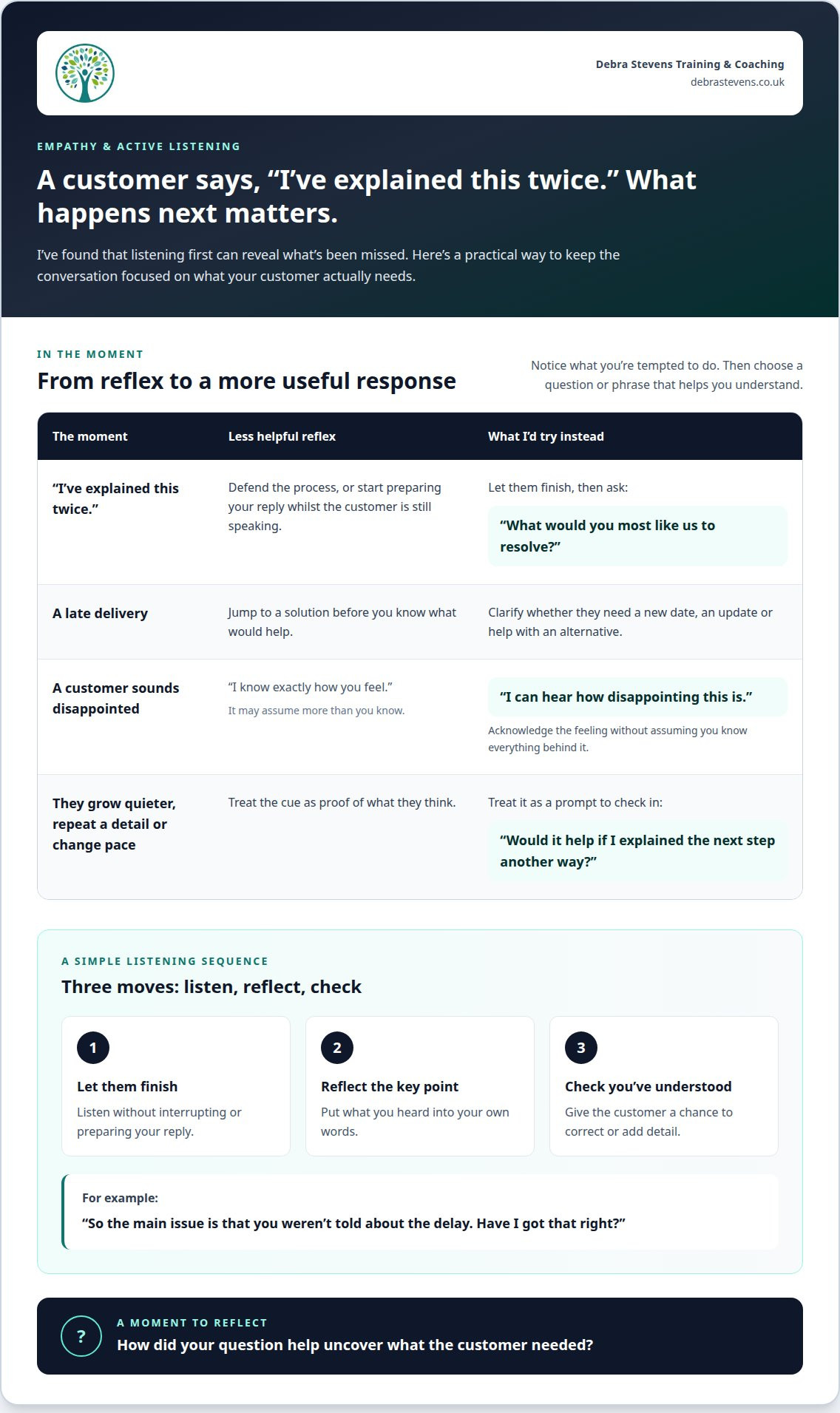
A customer says, “I’ve explained this twice,” then pauses. You might feel tempted to defend the process, but I’ve found that listening first can reveal what’s been missed. Let the customer finish, notice their tone and ask, “What would you most like us to resolve?” You’re keeping the focus on their actual concern.
When you listen to understand, resist the urge to prepare a reply while someone is speaking. If a customer reports a late delivery, for example, clarify whether they need a new date, an update or help with an alternative. One open question can prevent you from solving the wrong problem. In my experience, customer-facing teams build confidence by learning to understand what someone needs before choosing a response.
You can practise active listening in three steps. Let the customer finish, reflect the key point in your own words, then check you’ve understood. “So the main issue is that you weren’t told about the delay. Have I got that right?” This gives them a chance to correct details before you discuss a solution. Try the sequence with a colleague, using different customer concerns, then reflect on how your questions helped uncover useful detail.
Empathy means acknowledging feelings without assuming you know everything behind them. “I can hear how disappointing this is” recognises frustration; “I know exactly how you feel” may sound presumptuous. If you manage others, help your team notice the difference by reviewing specific phrases and discussing how each might come across.
Pay attention to more than words. A customer who becomes quieter, repeats a detail or changes their pace may be signalling rising tension. Treat these cues as prompts to check in, not proof of what someone thinks. You could ask, “Would it help if I explained the next step another way?”
You can make listening part of everyday feedback. After a customer interaction, invite a colleague to name one moment when they understood the need and one moment they could have explored further. Keep your feedback specific and positive, such as recognising a well-timed clarifying question. That gives them something practical to try in their next conversation.
4. Training and supporting customer-facing teams
I find training most useful when it reflects the conversations you actually have. Start by noticing where you hesitate: explaining a policy, responding to an unexpected request or guiding someone through a complicated process. Then practise those moments. Your role may call for different language or decisions from someone else’s, so one generic script rarely fits everyone.
In actor-supported practice, professional actors help recreate realistic workplace conversations. You can try an approach, receive immediate feedback and have another go. The actor is part of that feedback loop, helping you see how your words and delivery affect the interaction. You get the chance to experiment before a similar conversation happens with a customer.
A useful playbook gives you structure without turning you into a script reader. It sets out key information, available options and clear boundaries for decisions. For example, guidance might explain what you can resolve independently and when to involve a manager. Keep it easy to use during a busy shift, and update it when processes or products change.
When you give or receive coaching, connect feedback to an observable behaviour. Instead of saying, “Be more confident,” talk about a specific moment: did you explain the options clearly, or leave the customer unsure what would happen next? Agree on one skill to practise, then revisit it in a later conversation. This makes feedback actionable and helps you recognise your own progress.
Before training begins, decide what improvement would look like. You might observe how you explain choices, note recurring questions or review customer comments for patterns. Use those observations to choose what to practise next, rather than treating one result as the whole story. Ongoing support can include short coaching conversations, accessible guidance and space to discuss unfamiliar situations as they arise.
Debra Stevens Training and Coaching: Customer Service Excellence
Debra Stevens Training and Coaching’s Customer Service Excellence training helps teams practise the conversations that shape customer trust. It can be a good fit when staff understand the process but feel less certain handling complaints, explaining delays or adapting their communication.
Realistic workplace scenarios give people space to try a response, reflect on how it lands and practise again. The training can be tailored to your team’s roles and customer interactions, helping individuals develop skills relevant to the conversations they face.
If managers also need support in guiding and coaching their teams, Leadership & Management Training is another relevant option. Consider which conversations your people most want to approach with greater confidence, and use that as a starting point for their development.
Choose one conversation to change next
Confidence grows through the small choices people make in real conversations. Pick one customer interaction your team finds difficult, then ask what would help them feel better prepared. A clearer decision, a chance to practise or a more supportive conversation with a manager could be a useful place to begin.
To build confidence in customer-facing teams, make the next step specific and connected to the work they do. I can help you shape that development through Customer Service Excellence, The Why Factor or Conscious Human Skills Workshops, depending on what your people need to explore.
You don’t need to have every answer before starting. Bring the situation you want to work on, and we can talk through a practical direction together. Contact Debra Stevens Training and Coaching to begin a conversation about your team.
Frequently Asked Questions
How to build confidence in your team?
I’d start by checking whether people know what’s expected of them and have the information they need. Choose a common customer task, such as explaining a product feature, and ask your team where they feel uncertain. Then offer a clear reference or support from a colleague. When you recognise progress, be specific, so people can see which skills they’re developing.
What causes low confidence in customer-facing teams?
In my experience, confidence can dip when you’re unsure what you’re authorised to do, don’t have current product information or rarely meet a particular customer situation. Fear of blame after a mistake can make you hesitate, too. Look for patterns: are questions clustering around one process, handover or type of complaint? That may point to a practical support need, rather than a personal failing.
How can managers build confidence in customer-facing employees?
As a manager, you can build confidence by setting clear expectations and matching responsibilities to each person’s experience. In a one-to-one, ask, “Which customer task feels least clear at the moment?” Then agree on a useful next step, such as shadowing an experienced colleague or reviewing a process together. Keep the conversation focused on what would help your employee handle that task independently.
What training methods improve communication and customer service skills?
I’d choose training that reflects the communication demands of each role. If you’re on reception, you may need to practise welcoming visitors; if you’re handling complaints, you may need to explain decisions clearly. Try different levels of formality and directness, then notice how your wording lands in each situation. Observing a colleague can help you spot which phrases feel natural to you and which need adjusting.
How can role-play and practice help teams handle difficult customer interactions?
I’ve seen how practice gives you room to explore a difficult conversation without a real customer waiting for an answer. Try variations: a customer who’s upset, unsure of the details or asking for something outside your authority. Afterwards, talk about what information was missing and which response kept the conversation constructive. Then try the scene again with one detail changed. You’ll practise adapting, rather than memorising.






One Comment